Month: July 2013

  • The Joy of Home Ownership: Adventures in Plumbing

    When we moved to Moscow, we knew we’d be here for more than five years and that buying our own place would probably benefit us more in the long run than renting. There are many advantages to owning your own home. The most obvious is that your monthly payments go toward something tangible. When you pay rent on an appartment, all you get back is a place to live for the month. With a mortgage payment, you’re that much closer to actually owning the place you live in, which means when you move out, you can get that money back by selling the place. It’s also freeing. We can do whatever we want to the house without having to ask permission. Don’t like the walls? We can paint them. How about a new floor? Done. Want some pets? Nobody to raise our rent for having them, or outright deny us the choice to have them. We have our own yard that we can decorate and landscape as we please, including putting in a vegetable garden.

    Of course, owning a home isn’t all freedom and bliss. It costs money. We still have to pay utility costs, but when something breaks, we’re also responsible. There’s no landlord to call to have it fixed. Such is the case when we found not one, but two water pipe leaks this past week. The first leak was in the pump room in the garage. The pipe leaving the presure tank was connected to the pressure T joint via a steel coupling and a nipple. The nipple, threaded into the T, had corroded its threads and developed a small spray that was slowly getting bigger. So, when Tate came over to help me take off the broken pieces, he thought the threads inside the T had been stripped away. It was later that I found the threads to be just fine, only dirty with build-up and possibly the threads from the pipe that had come out of it. The pressure T happens to also be threaded on the outside, so I bought the proper step-down joint and repaired it. When I got the water back on, the leak had been repaired.

    But it was still dripping water. This time, it was coming from the base of the quarter-inch pipe where the pressure switch connects to the T. We had some plumber’s putty and used it to try and temporarily patch the leak. It worked, sort of. The leak persisted, but had slowed to a very slow drip by morning. However, the putty should seal a small leak like that. It turns out the putty we had bought was old and starting to dry out, causing its application to be quite difficult. We picked up a fresh pack and attempted to seal the leak again. In doing so, the leak got worse. When investigating the problem, I noticed that the pressure switch wobbled quite a bit and I thought that maybe I could screw it down tighter. So, I disconnected it and soon discovered that the pipe was indeed corroded and the threads had snapped off.

    In the end, I got a new pressure T and replaced the steel pipe with PVC, as the rest of the pipe had already been converted. The old iron pipe had been connected to the new PVC with a self-adhering coupling. I figured I’d use the same method which would give me an easy disconnect point should I have to take the pressure T off again in the future. Of course, on first connection, I must not have had the coupling lined up quite right. It was very difficult to screw into place and after turning on the water and noticing a small leak, the coupling slid right off the new pvc making a mess of my pump room. After some fiddling around, I got it to fit properly, and so far, there have been no leaks in the pump room.

    The second leak was in the house. Erin came home from her work trip to Dinosaur National Monument and noticed that the floor in the kitchen had buckled a little bit, indicating it was wet. She then heard a small leak which we thought was coming from under the floor. But our floor is solid concrete under the laminate. As we started to tear it up, we noticed that the leak was coming from pipes behind our kitchen counters. So, while Tate was out, he helped me remove one of the cabinets which, thankfully, wasn’t installed correctly and was quite easy to remove. Again, the leak was between a steel nipple and a T-joint. The nipple had corroded through its threads spraying water against the cabinets and leaking down into the particleboard subflooring. We were able to remove a small section and replace it with pex tubing and sharkbite connections. The leak has been patched and we now have working water again. It was good to take a shower this afternoon.

    The aftermath of this leak is going to be the more difficult part. Because the cabinets and subflooring are made of particle board, they quickly absorb water. We’re not entirely sure how long the pipe has been leaking, but there was a mild odor of mold and mildew. Even if the cabinets aren’t pemanently damaged, the subflooring and the floor pannels are. We’ll still have to rip out the cabinets to repair the flooring underneath and assess any other damage to the wall. In addition, these failures have us worried that more junctions are going to fail in the near future, so we’re contemplating having all of the steel pipe replaced with pex or pvc while we have the cabinets out. Worst case scenario, we’ll have ourselves a completely remodeled kitchen. At least if the damage is bad enough, our insurance policy will help cover the repair.

     The joy of home improvement projects, voluntary or involuntary, is that you come to realize how many tools you need to be a home owner. It’s not enough to have a hammer and some screw drivers. Thankfully, Tate had some pipe wrenches for us to borrow for now, but I think I’ll be investing in at least one in the near future. There are some jobs that you just need a professional for. Fixing the kitchen may be one of these. But by repairing these small plumbing faults ourselves, we likely saved a couple hundred dollars. I’m not happy about the circumstances, but it’s nice to know that some problems aren’t as difficult to fix as you might think.

  • My Research: What I have been up to

    My Research: What I have been up to

    Last week, the fruits of my last three year’s work has finally come to fruition in the journal PLoS One. The premise is that the personality behavior we call boldness, or the bold-shy continuum, is not only heritable, but a genetically correlated multivariate trait. The research is essentially a continuation of a project Mary Oswald completed for her dissertation, however upon first submission, reviewers criticized the study for its lack of replication. So, in the Summer of 2010, she set up a second selection experiment which I took over and have been maintaining since.

    Boldness is an interesting behavior to study in animals. As a personality behavior, individuals with a particular boldness score relative to the population tend to remain that way for the long-term, and while there is some plasticity between contexts, individuals that are bold tend to remain bold, and individuals that remain shy tend to remain shy, and populations can evolve toward one end or the other based on selection pressures. Of course, the best way to really get this point across is to see some videos exhibiting just what boldness and shyness represent.

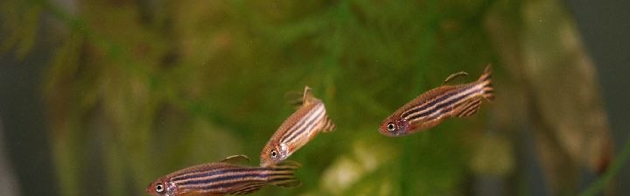
    These are Zebrafish, Danio rerio. The top tank, labelled “Nadia,” contain a wild strain, but these fish aren’t taken directly from the wild. Instead, these are the 4th generation from wild fish to be raised in captivity right here at the University of Idaho. Notice how they prefer to swim at the bottom of the water column and shy away from a human presence. Now contrast that with the bottom tank containing fish from the Scientific Hatcheries (SH) strain, which are more than 30 generations removed from captivity. They not only spend more of their time near the top of the water column, but are also un-phased by a human presence. In fact, if they do react, it’s to come closer to a human observer rather than to shy away. This observation in contrasting behavior between wild and domestic populations has been repeatedly observed in a number of different species including trout, salmon, birds, mice, rats, dogs, and foxes. The question is: why?

    Now, your first thought is that this might be a result of rearing environment. Domesticated animals grow up around people and are therefore not afraid of them. But, remember that both of these populations were reared in the same environment. The “wild” fish have never seen their native habitat and were raised with the same human contact as the domesticated fish. When the environments are equalized, differences must be due to genetic differences.

    One way to test this hypothesis is to select upon these behaviors. Simply put, selection doesn’t act on a trait if there is no genetic variation controlling variation in that trait. We took a random sample of 80 SH individuals and behavior-typed them by taking 24 point observations over the course of a week scoring whether they were within one body length of the front of the tank near the observer, or not. The observations are averaged to create a “boldness” score. The five highest scoring males and females were mated to create a “bold” line, and the five lowest scoring males and females were mated to create a “shy” line. For each of these observations, we also recorded the location in six vertical depth zones to come up with a depth preference measure. Once each day, we measured feeding latency, the time it takes for an individual to feed from the surface of the water.

    After two generations of selection, we were able to estimate the heritability, that is, the proportion of behavioral variation that is attributed to genetic variation, and the genetic correlations using a REML analysis. The gist is that these three behaviors have a significant, but moderately low heritability (between .25 and .3) and fairly strong genetic correlations (between .6 and .8). What this means is that selection can, in fact, act on these behaviors, and that selecting on a single behavior will also induce a response in the other two. As I stated earlier, these results have finally been published in PLoS One, and because it is an open access journal, you can actually read the paper free of charge.

    One of the implications here is that the behavioral differences between captive and wild populations of the same species are due to an evolutionary response to the captive environment. Of course, it could be that in captivity, humans will artificially select for bolder behaviors either intentionally, in the case of the pet industry, or unintentionally, either by selecting on traits that are correlated with boldness, or because bold individuals are simply easier to catch for the mating process. However, there is a hypothesis that shyness is selected for in the wild by predators (we assume that a human observer represents a potential predator), and that in the absence of predators, boldness might be the more fit phenotype. Bold individuals are risk-takers. They’re more likely to be seen in the open foraging for food where they are in risk of getting picked off by a predator. Shy individuals are more likely to hide and wait until it is safe to eat. The trade-off is that while bold individuals risk their lives, they consume more resources which they can invest in growth and reproduction. On the other hand, shy individuals live longer, and might produce more offspring over their lifetime. In the absence of predation, bold individuals will still frequent the open habitat and feed sooner than the shy individuals, but they won’t be picked off. Thus, there is the potential that they can produce a higher quantity and quality of offspring than shy individuals in captivity. This is also confounded by the observation that shyness is correlated with anxiety and stress. Highly stressed individuals are unable to allocate as much energy toward reproduction compared with unstressed individuals. Anxious animals in captivity don’t breed as well, and we’ve noticed this trend while trying to breed our wild lines of zebrafish in the laboratory. I hope to test this hypothesis in the near future by bringing in some new populations of zebrafish from the wild and measuring fecundity and behavior.

    In addition to linking boldness with fitness, I’m also interested in the nature of the genetic correlations among our three boldness components. Heritabilities and genetic correlations are population specific. Just because we’ve estimated these numbers in one population does not mean they hold true in another population. That is because heritability is linked to allele frequencies, and those are going to change from population to population. In fact, they’re going to change within a single population over time, especially if selection is acting upon the traits. Genetic correlations, on the other hand, can be somewhat stable depending on their origin.

    There are two ways to generate a genetic correlation. One is to create linkage disequilibrium (association of alleles at one gene with alleles at another) by selecting on two or more traits simultaneously. For example, if blonde hair and blue eyes were preferred traits in a population of humans, the genes for each trait would fall into linkage disequilibrium. Normally, recombination would disassociate the two traits from one another, but with preference for both, blue eyes and blonde hair would both rise in frequency in the population in such a way that if you sample an individual at random, he’d likely have both blonde hair and blue eyes. Since the traits are now correlated, selecting on only blonde hair will still select for blue eyes because the occurrence of blonde hair and brown eyes is relatively low.

    The other way to generate a genetic correlation is if two traits share the same genes, also called pleiotropy. Suppose eye color and hair color are controlled by the same gene. In this case, the allele for blue eyes (lack of pigment) also produces blonde hair (lack of pigment). If these traits were controlled by a single gene, it would be impossible to disentangle hair color from eye color. However, quantitative traits such as these are much more complex. There are many genes that control your hair color, and many that control your eye color, and it’s likely that some of them are shared through pleiotropy, but many of them are not.

    In this respect, I am interested in understanding the genetic architecture of boldness. How many genes likely control each behavior and are they linked through pleiotropy? How similar are the correlations in other populations? There are a number of ways to get at these questions. One is to perform a QTL which involves looking at variation across the genome for areas in which genetic variation correlates with behavioral variation. In doing this, we can begin to understand how the genome can influence behavioral traits. The other is to measure heritability and genetic correlations in other populations. The resulting G matrixes can be compared, mostly looking for rotation. If the matrixes align, then correlation structure is conserved. That isn’t conclusive proof that each behavior is linked by pleiotropy, but it might explain why the same sorts of behaviors vary in the same direction between wild and domestic populations.

    In other words, behaviors associated with the bold-shy continuum may be constrained to always evolve together during domestication events. That is the overall hypothesis and theme of my doctoral dissertation.

  • 4th of July

    4th of July

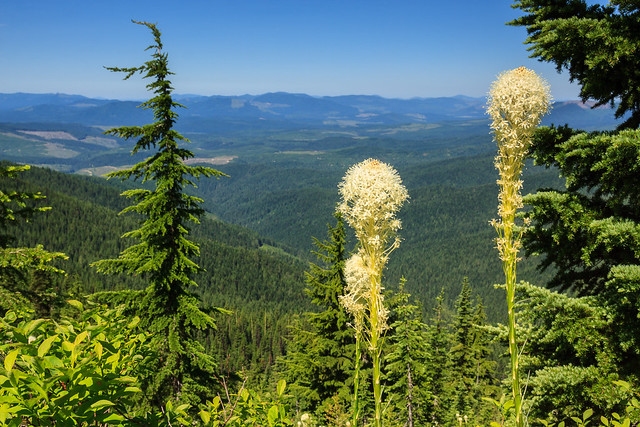
    A Beargrass Mountain View

    Once again, I missed the fireworks. I admit that I was looking forward to photographing them, but in the end, I was busy hanging out with friends, and we decided not to go over to Pullman. I did spend much of my nation’s birthday enjoying one of the best parts about this country: its wild side.

    I went back up to Freezeout to hike into the alpine meadows of Grandmother Mountain, and I brought a friend with me who had never been up there. Our goal was not to reach the summit, but to simply escape the heat, enjoy the views, and see what wildflowers were in bloom. It was a beautiful day for a hike worthy of celebrating our day of Independence.

    Wilderness is not uniquely American, but there are some unique aspects of the idea that originated here. There are many vast tracts of wilderness on the planet, but most of them are located in places that are either uninhabitable or are conomically depressed. But as third world nations develop and our resource consumption grows, these wild places are under threat of being lost forever. This happened through much of Europe where wilderness is nearly nonexistent. Sure, there are still natural places, but the habitat is highly fragmented and much of the forest land has been converted to fields for agriculture. The United States was headed for a similar disaster. Most of the forests in the east have been cut down at one point in our history and left to re-grow in small patches here and there. We have almost no original prairie left on the great plains. And the great western forests are logged down to the soil in places.

    But before we could cut down every last tree and develop every last interesting place into a circus show, we decided that some places were better left unspoiled in their natural state, and that this untouched paradise could be an attraction in itself. So, at the end of the 19th century, the national park system was born, an idea that is truely American and has spread around the world in efforts to protect special places in danger of being lost for developmental gain. In the 1960’s, the push for true wilderness brought us the Wilderness Act of 1964, allowing congress to set aside land to never be developed. Few of today’s wilderness areas were untouched when designated, most were once logged or mined or farmed and were abandoned to be reclaimed by the forces of nature. This is what makes the United States so great and so unique. We are a developed and technologically advanced nation that set aside valuable habitable or developable land in order that we may have some wild places left to enjoy.

    The forests of Marble Creek and Freezeout were once logged bare, but decades of non-use have hidden many of the scars. The landscape is beautiful up there with a sense that you truely are in a wild place, even if it’s not completlely untouched.


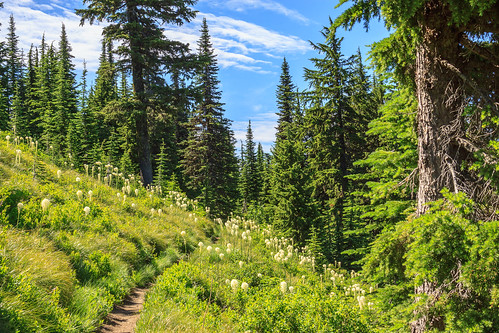
    Grandmother Mountain Trail

    I’m still amazed by how much beargrass is in bloom. It seems to be a good year. But all good comes with a trade-off, and the trade-off here is that the rest of the wildflowers don’t seem to be doing as well. The quantity of lupine blooming is down from the past two years, and much of the other color is missing as well. It’s not that the plants aren’t there, they just aren’t putting out flowers this year.

    CJ and I hiked a total of four miles, two in and two back, which brought us up the slope to Grandmother Mountain, but not quite to the 6000 foot line. In other words, we didn’t make it to the big rock upon which I like to stop and rest. But that’s ok. I hiked four miles and my leg never bothered me. This marks the first time I’ve hiked that kind of distance since the accident, and to make it better, we made the hike in 2 hours, my normal hiking pace. I’m excited because I could very well be back to taking moderate day hikes by the end of the summer.

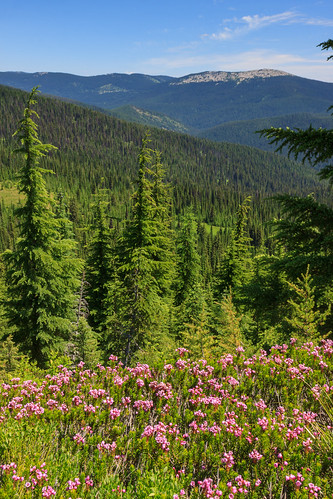
    Mountain Heather and Lookout Mountain

  • The Garden of 2013

    The Garden of 2013

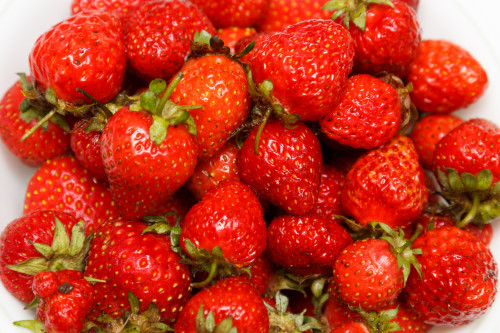
    Strawberries

    Because I was laid up and out of commission for much of the spring, I wasn’t able to work on expanding our garden much this year. Last year, I built a third 4×8 foot box and a 2×4 foot box which were meant to be tiered for planting small annual herbs in large quantities. I never got that box filled with dirt, so that will have to wait until next year.

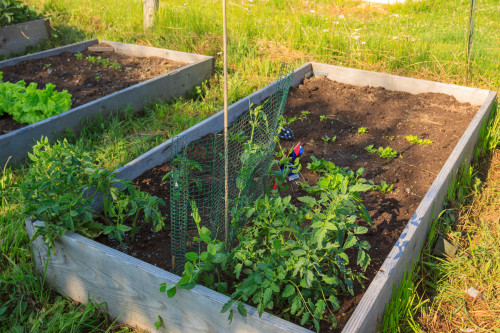
    In the mean time, we’ve planted our usual array of crops in the two 4×8 foot boxes with limited success. Erin had bought some tomato plants in April, and although I warned her to wait, she planted them anyway. We had one last frost in early May which killed the plants, so we had to start over again. We bought a lot of plants toward the end of may: 3 tomatoes, 4 peppers, a whole bunch of squash, and a few more strawberries. We also planted spinach, lettuce, basil, cilantro, parsley, peas, and chard seeds directly into the beds. A few days later, we noticed that the chickens had somehow gotten into the garden, eating most of the seeds and stirring up our nice rows. It took us a few weeks before we had the time to go back and plant again. In the mean time, a few seeds remained and sprouted. I carefully dug up the remaining plants and re-arranged them into rows while we put the rest of the store-bought plants into the beds. After a week of constant rain, most of those seeds have started sprouting, so we’re bound to have some crop this year.

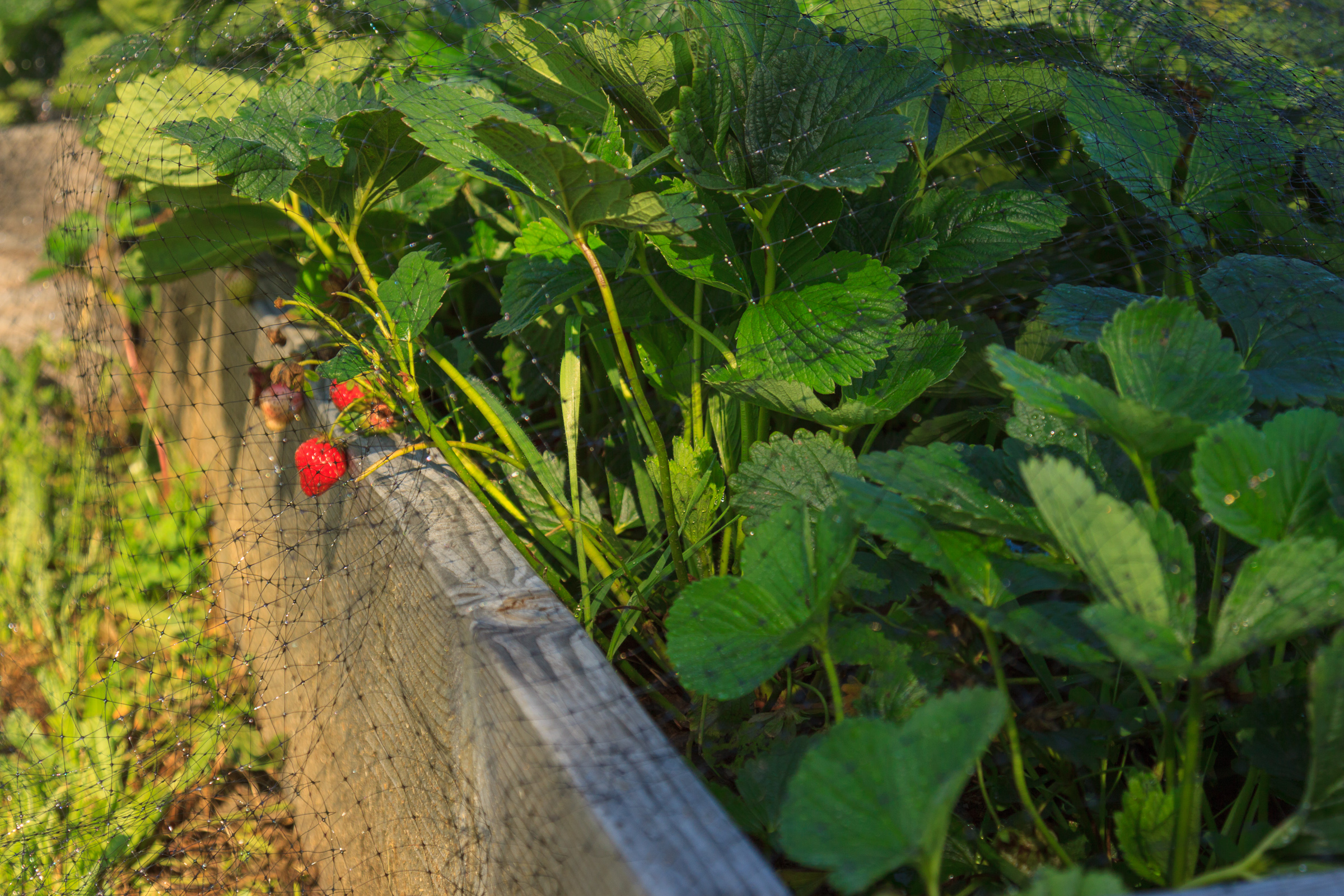
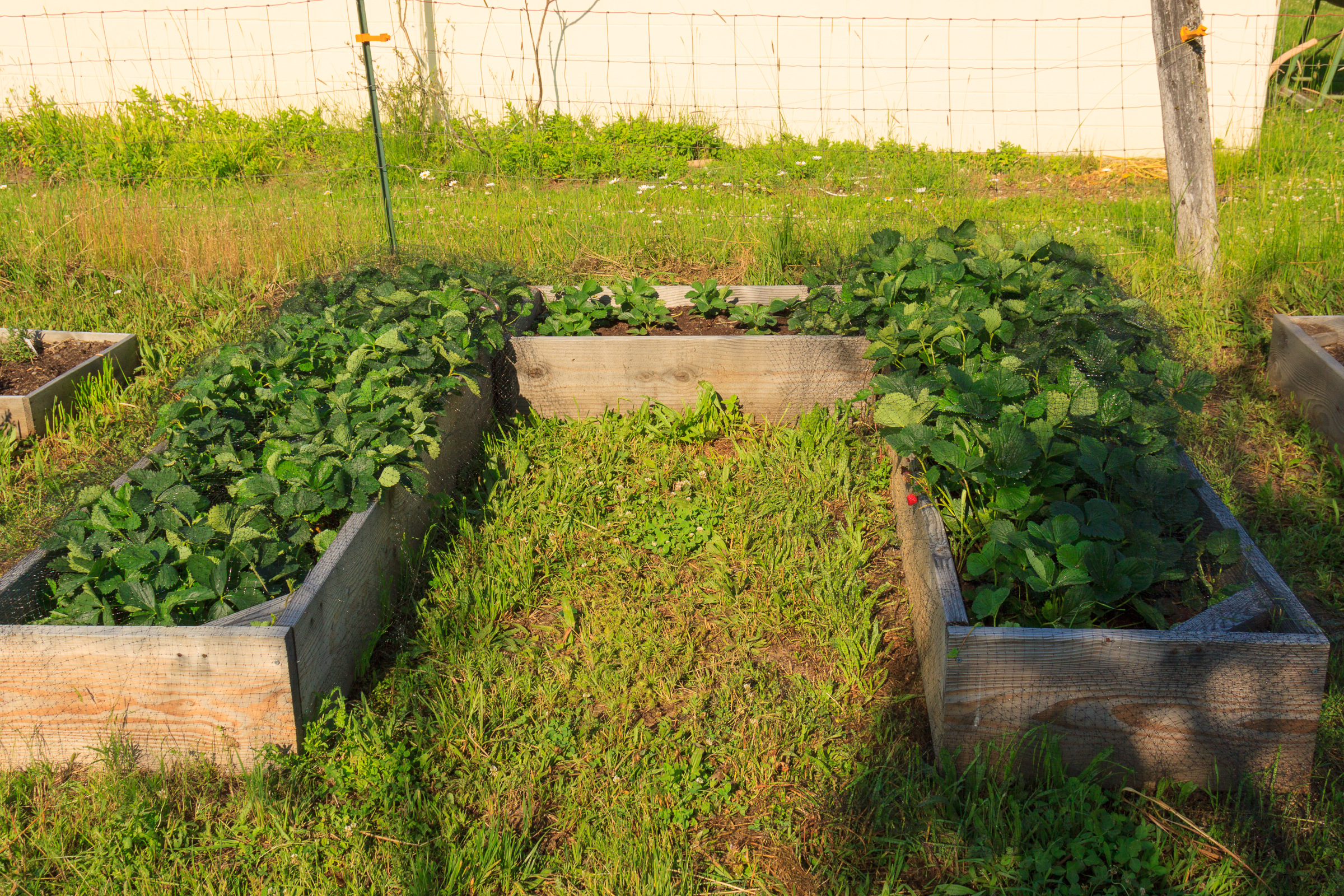
    Meanwhile, the strawberries are happy as ever. We’re getting a bowl-full each day, somewhere between half and one pound. Though the berries are smaller than the ones you find in the stores, they pack much more flavor. Of course, it wasn’t always this way. When the strawberries first ripened, I would pick a few here and there, but find most of them had already been eaten. I had noticed a robin hanging out by the strawberry bed, so while I was away at Evolution, Erin bought some mesh netting to throw over the plants. Since doing that, we haven’t had a problem with the birds. I think we might try to double our strawberry patch for next year in order to produce enough to make jam. We’ve also started some raspberry vines, which aren’t looking so great this year  because they sat in a bucket too long, but they’re starting to put out new shoots and leaves, so next year we should have a small harvest.

    We have some tomatoes, peas, spinach, chard, and letuce growing in this box.
    We have some tomatoes, peas, spinach, chard, and letuce growing in this box.
    There's a tomato, spinach, peppers, lettuce, basil, and cilantro.
    There’s a tomato, spinach, peppers, lettuce, basil, and cilantro.


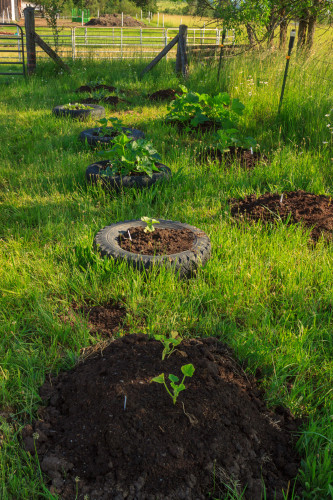
    This year, we planted a variety of squash and watermelon.
    This year, we planted a variety of squash and watermelon.


    Strawberry PatchStrawberry Beds

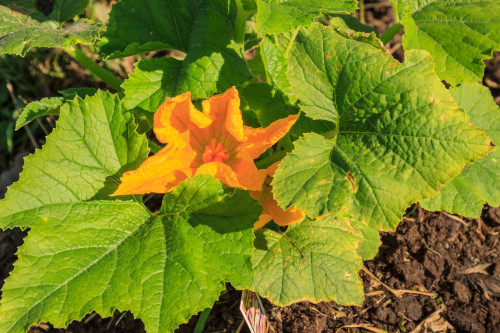
    Squash Blossom

    One of my projects this year is to eliminate the grass between the boxes, putting in nice walkways instead. I’ll use a combination of cardboard, newspaper, and straw to mulch over the grass and eventually cover with wood chips. This should help keep weeds down, eliminate the need to whack back the grass, and create aesthetically pleasing walkways. By the time we leave this place, we should have built up a nice productive garden for the next occupants to use. Maybe I can even get a greenhouse.