Of data and formatting
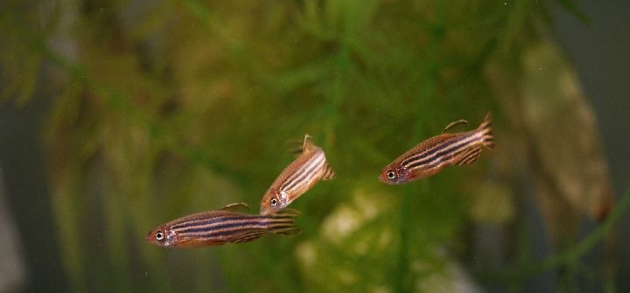
I’ve been in graduate school now for a year and a half, and I have yet to reveal just what it is I’m working on. Almost immediately coming in, I took over a project originally designed and run by Mary Oswald, the previous doctoral student who had graduated over the summer and left the lab officially at the end of my first semester. The project, in essence, is a selection experiment to analyze the genetic component of boldness, a trait often associated with the evolutionary process of domestication. Our model organism is the Zebrafish, Danio rerio. The back story is that in the wild, Zebrafish, like most organisms, are are very shy to humans, yet their domesticated counterparts are indifferent, even showing preference toward associating with their human caretakers. Boldness, in many circumstances, can be a learned trait. Feral cats, for example, tend to cower and run from people despite coming from a lineage of centuries of domestication. Even individuals coming from a captive home may become fearful of humans when abused or neglected.
In this respect, behaviors can be thought of as a quantitative trait, part of which is controled by the effects of several loci in the genome, part of which is controlled by the evironment of the individual, and part of which may be contributed to the interaction between the genotype and environment. There is certainly a variation in environment between a wild and captive habitat, but within each habitat, selection favors different traits. In captivity, selection on a trait may be intentional such as growing larger salmon for food production, or it may be a by-product of selection on other traits or just simply a relaxation of selection that had been occuring in the wild. The current project I am working on is the start to help us understand the genetic component of boldness. But an understanding of the genetic components of behavioral adaptation to captivity can have some major implications toward the way we run endangered species conservation programs.
In 2007-2008, Mary began a slection experiment where she phenotyped a random population and bred the boldest and the shyest individuals to create two diverging selection lines. She actually attempted this in multiples strains, but didn’t have enough success with the wild strains to continue the trials. Thus our data is only for the commercially-bred Scientific Hatcheries line. After 3 generations past the initial, she had two siginificantly diverging lines, but in order to publish the results, we had to have an independent replicate to show that our results were not due to genetic drift. So that’s where I come in. In the summer of 2010, Mary began a second round of selection on a new population of SH fish, and since the end of 2010, I have been continuing that process.
I have just bred our second generation this semester with lots of 3rd generation individuals to work with, so I’m confident we can keep going longer than the first trial. But we have a complete replicated experiment to compare with Mary’s original data, and that’s what I plan to present to the Society for Integrative and Comparative Biology (SICB) conference in January.
The biggest hang-up so far has been combining Mary’s data with mine. In order to analyze the pedigree, each individual must have a unique ID number. But when Mary ran her selection, she started over each generation. Her data was also formatted slightly differently than mine, so I have spent the past few days tryign to interpret what she did and format her data to fit mine. After several days of hard work, I’m happy to say that I think I have a data set I can now throw into WOMBAT to analyze with a REML (that’s Restricted Maximum Likelihood for you non-stats people) analysis and get an estimation of heritability for boldness in zebrafish. Of course, now I actually have to figure out how to use WOMBAT.
Like I said before, this is only the beginning. We need to run a QTL analysis and we’re waiting on some SNP data to identify regions of the genome that are candidates for genotyping. We have fin clips for every individual in both trials, waitin and ready for DNA extraction for analysis. Once we get genotypes, we’ll have a better understanding of what’s going on evolutionarily and we can set our sights on some questions regarding the evolutionary processes that contribute to domestication.