Evo-WIBO and the Olympic Peninsula
I’m two weeks on this post, but forgive me because the last two weeks of the semester have been insane. The bi-annual northwest evolution conference, Evo-WIBO, occurred the last weekend of April. If you don’t remember, I attended the last meeting two years ago and presented a talk on the results of our selection experiment. This year, I presented a poster (my first) on the use of function-value trait analysis to analyze video tracking data. In short, we can use functions to describe behaviors over time and use more details in the data than if we were to simply distill it all down to a single mean number.
In many ways, this conference was more useful to me than the last one. This is the first conference in which I presented on work that is truly my own. Even at Evolution last summer, I had been presenting on data using the the selection lines, and though I spent so much time working on that project, it came out of a previous student’s dissertation, and I won’t be able to use it in my own. I still had tons of fun socializing and talking science with other students and faculty from neighboring states. As a 4th year graduate student, I felt more confident in my knowledge of evolutionary biology, and therefore could have more meaningful conversations. In the upcoming years, the purpose of conferences will shift to finding a post-doc, though I’ve already got some potential labs on my radar.
I don’t want to focus on the conference. Instead, I’d like to shift focus to my time after the conference: exploring the Olympic Peninsula. Two years ago, I felt it was a shame to drive all the way to Port Townsend for two nights only to return without seeing the sights. So, this year I vowed to take advantage of the location and spend a couple of days in Olympic National Park. I convinced three others to stay and explore with me. Here’s our adventure.
Friday, April 25

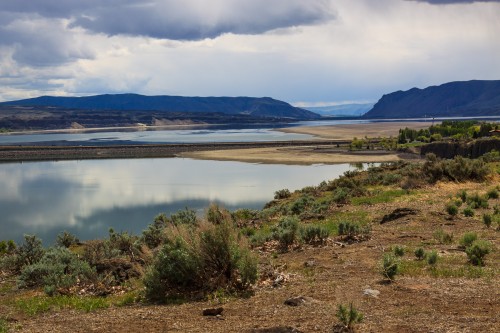
Two years ago, as I crossed the Columbia River for the first time, I found out that Washington has a petrified forest. At the time, I had to pass it by. This year, I deliberately made it a place to stop and stretch my legs. The Ginko Petrified Forest is neat, but unfortunately, we were before the summer season and the visitors center wasn’t open on a weekday. There are numerous logs on display outside with an overlook on the Columbia River. A set of petroglyphs had been relocated here when the nearby Wanapum Dam was built. There are a few hiking trails in the park, but they did not take off from the visitors center, and we didn’t really have time to walk them. It was a nice stop, and some day I’ll make it back out there with more time to explore.
Monday, April 28

The conference ended at noon on Sunday. We walked around Fort Worden while waiting for our 4th member to arrive from Seattle. After a delicious seafood dinner in Port Townsend, we drove to the Dungeness National Wildlife Refuge to camp. In the morning, I walked around the little county park to do some birding and geocaching while the others got moving. We then headed into the wildlife refuge to check out the Dungeness Spit, a 5.5 mile sandbar that juts out from the mainland. The sand deposition has created a harbor for wildlife. We saw many species of waterfowl including loons, grebes, surf scoter and more. We even had a seal follow us for a while. We were hoping to see a whale, but had no luck in that department.
There is a lighthouse at the end of the spit. From the parking lot, it’s a 5.5 mile one-way walk. Since we got a late start relative to the tide, we didn’t make the lighthouse a priority. At low tide, it’s a nice gentle walk along the beach. At high tide, you’re confined to the upper stretches of the beach, which limits you to climbing over giant pieces of driftwood. The lighthouse is staffed and provides bathrooms and drinking water to those who venture out that far. After our hike on the spit, we headed into Port Angeles and then on to the Sol Duc valley where we made camp for the night and soaked in the hot springs at the resort.
Tuesday, April 29
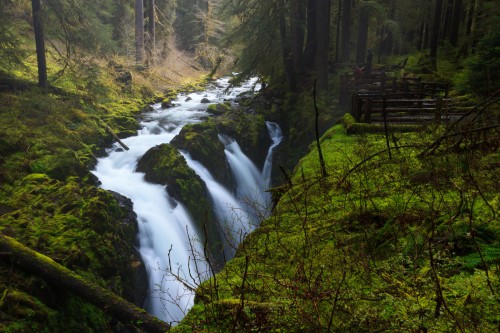 The Sol Duc campground is incredibly beautiful. It’s situated on the banks of the Sol Duc River in the midst of an old-growth forest. The best part about visiting Olympic National Park in April is the relative solitude and lack of crowds. Although only one loop of the campground was open, we had no trouble finding a campsite.
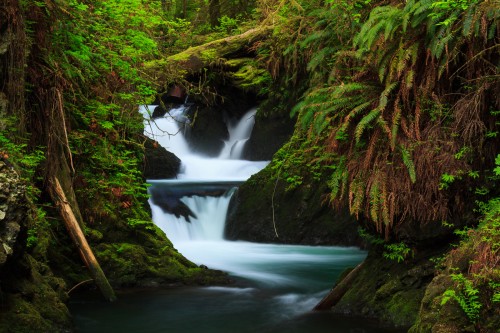
It hadn’t rained overnight or the previous evening, but everything was wet and damp in the morning. The sky was overcast, and that had me excited for appropriate light conditions for photographing waterfalls. Our destination for the day was the Hoh Rainforest, but since Sol Duc Falls was less than a mile’s hike in, I convinced everyone that we should make the hike before heading out.
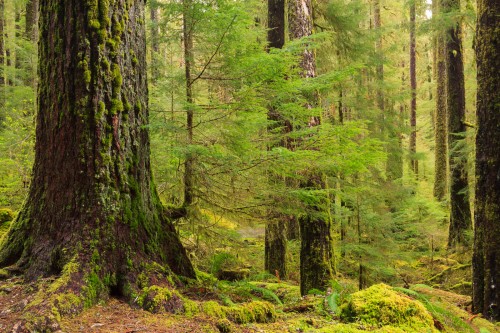

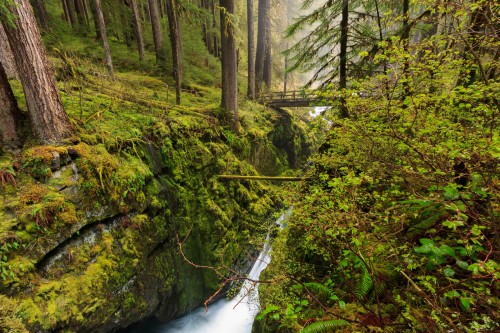
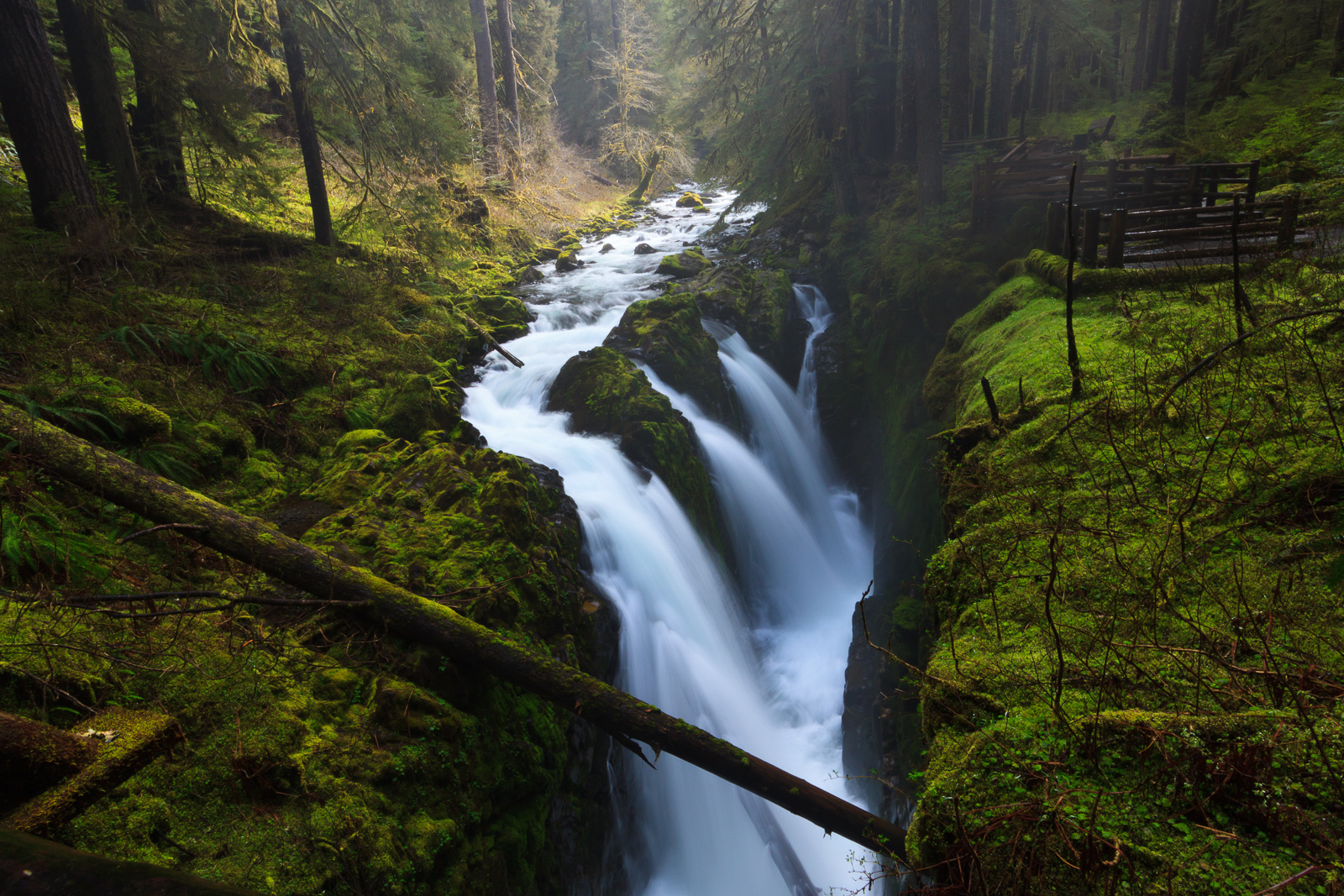
The forest at Sol Duc is absolutely gorgeous. The trees are all 150-200 feet tall, and many are enormous in girth. Every log and rock is covered in a layer of moss. Small creeks tumble down from the side. And then you get to the waterfall. Sol Duc Falls drops 48 feet into a narrow gorge. The interesting part is that these falls enter the gorge from the side, rather than head-on. Sol Duc is perhaps the most picturesque waterfall in the park. From these images, it’s not hard to see why.

After a nice morning at Sol Duc, we drove out to Forks where we stopped for lunch and a re-stock on food for camping. By the time we made it into the Hoh Rainforest, the sun had come out in full force. The rainforest is quite a stark contrast with the forests of northern Idaho. For one, the humidity in the air is above 80%, on par with life in the southeast. On this April day, temperatures rose into the high 70’s or low 80’s. On all accounts, it was beautiful weather, except for photographers. In the forest, full sunlight creates high contrast conditions that are incredibly difficult to deal with. Either you keep details in the shadows and get highlights that are blown out where the sun is shining, or you get good exposure for the sunlit spots, but everything else is nearly black. I spent some time taking multiple exposures to blend together in Photoshop using the built-in HDR tools. I think this compromise worked well, though I still would have liked overcast and even rainy conditions.

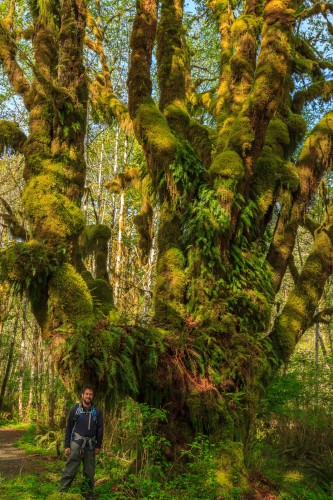
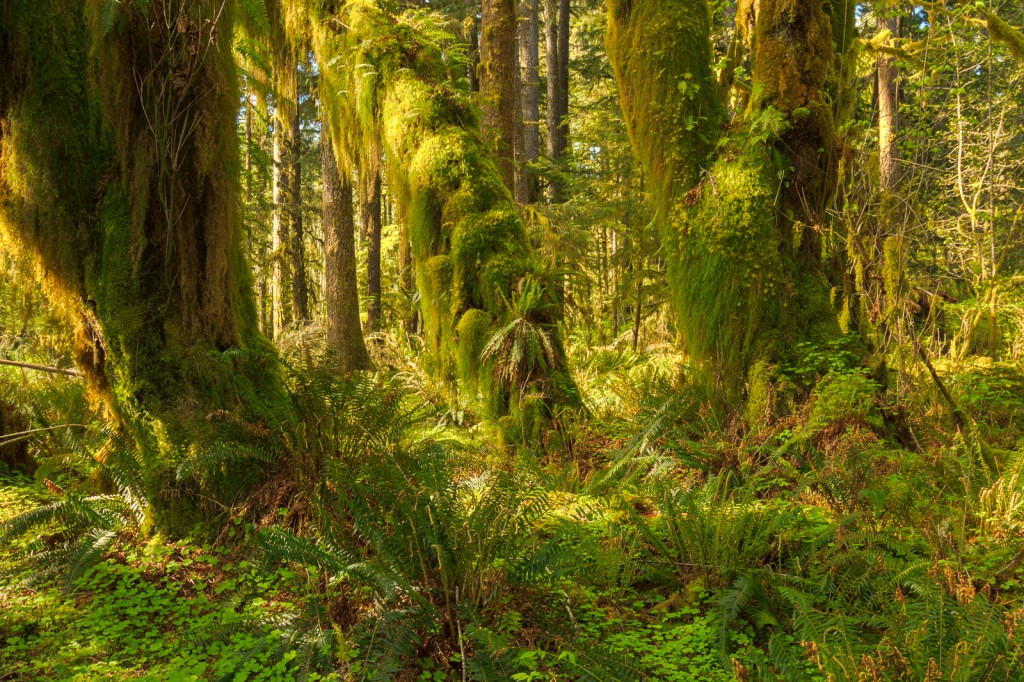
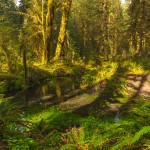
The Hoh Rainforest is unlike any forest I’ve been in. In addition to the huge old-growth spruce, fir, and cedar, the forest is full of maples. These trees are covered from top to bottom in epiphytes. A blanket of moss covers every open surface, and that creates a substrate for ferns to grow. Seeds from the larger trees might not even make it to the ground, instead settling among the epiphyte communities and sprouting mid-way up the trunk of an existing tree. Those that die and fall over are quickly overrun with new plants. These nurse logs serve as nutrients for a new generation of forest dwellers. It’s not uncommon to see a row of large trees with a hole in their base where the nurse log once nourished them.

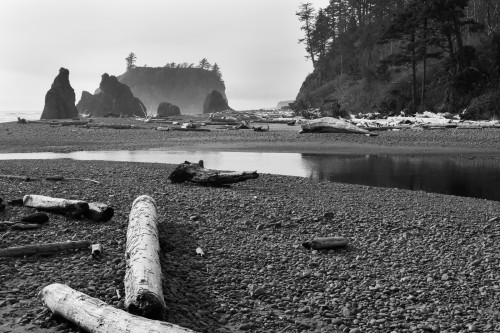
After spending some time at the Hoh Rainforest, we headed out for Quinault lake where we planned to spend the night. On the way, we stopped for a brief leg-stretch at Ruby Beach. Like the Dungeness Spit, the coastal beaches on the Pacific are full of giant driftwood logs. The beach is a rock beach below a cliff. Sea stacks rise like pillars from the waves. On a longer trip, we would have spent a whole day on the coast, but we were in a rush to set up our campsite before dark.
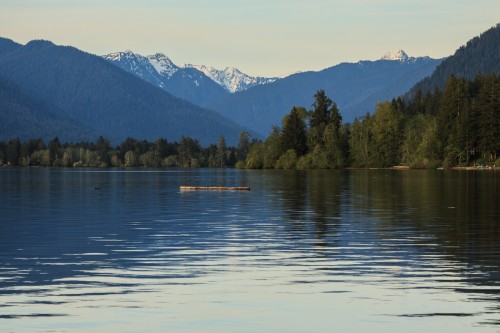
The only campground open was Willaby, but I think it was the nicest campground that we stayed at the entire trip. Willaby sits on the shore of Quinault Lake among a patch of old-growth forest. The campsites are spread farther apart than those in the national park, and they’re also smaller. Most of the sites would accommodate only one tent, but we managed to find one that fit two, and it was on the lake shore.
Wednesday, April 30
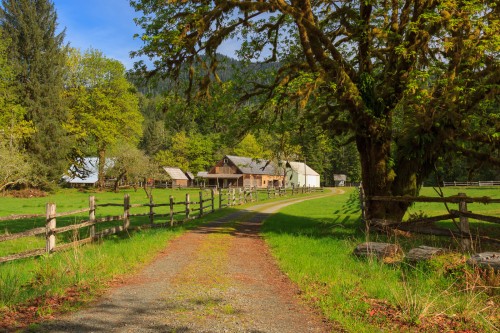
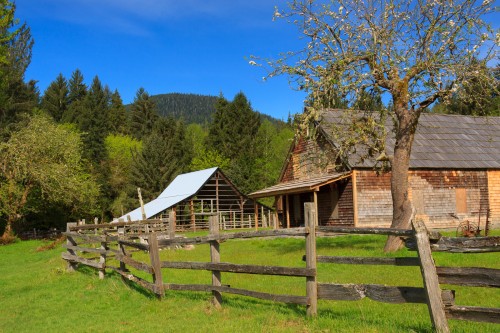
Quinault is a great place to spend some time. There is a system of trails in the national forest across the road from the campground. These trails traverse a beautiful rainforest and visit some waterfalls and some incredibly large trees. There’s even a waterfall just outside the campground. But on the other side of the lake, there’s another maple forest in the national park. We hiked the loop in the Quinault Rainforest, which passes through an old farmstead. After having been in the Hoh Rainforest, I think I like the Quinault better. There are fewer downed trees and fewer people. The forest habitat itself is similar, but the solitude and the historic homestead add to the beauty.
After our jaunt through the Quinault Rainforest, we headed home. It took us 8 hours to drive 430 miles, stopping only a handful of times for bathroom breaks and once to refuel. Olympic National Park is huge. I’m glad I suggested two full days to enjoy the area, but in reality, two wasn’t enough, even in April when access to the high country is restricted to skis and snowshoes. The low-land attractions seem like they’d be short, but they are spread out such that driving from valley to valley takes at least an hour, sometimes more. Spring is a great time to visit the coast and the rainforest. Summer is great for trekking into the alpine portions of the park. I’m glad to have gotten a taste of what the park has to offer, but it remains high on my list of places to return. We never made it up to Hurricane Ridge, and I’d like to backpack into the wilderness. Olympic National Park is pretty awesome.