|

Chickadees

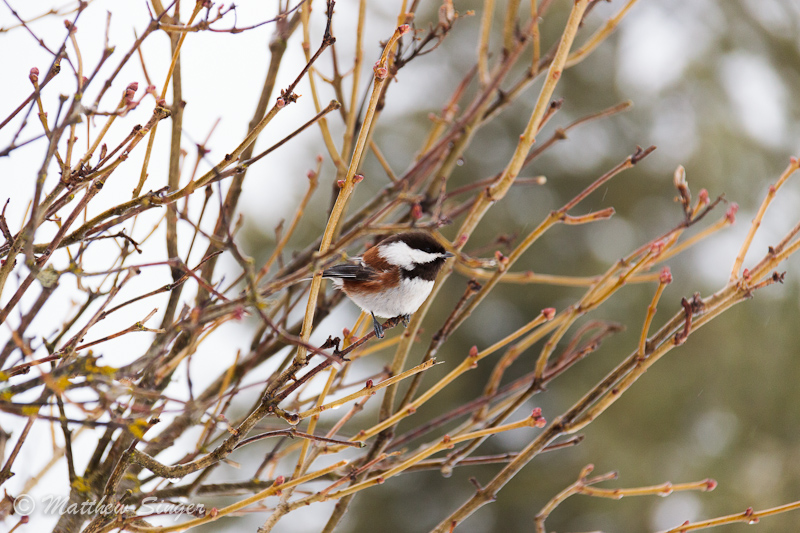
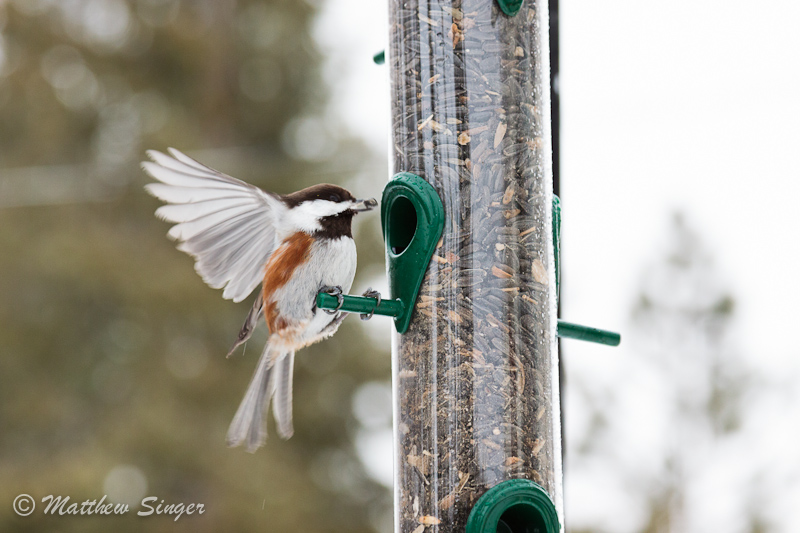
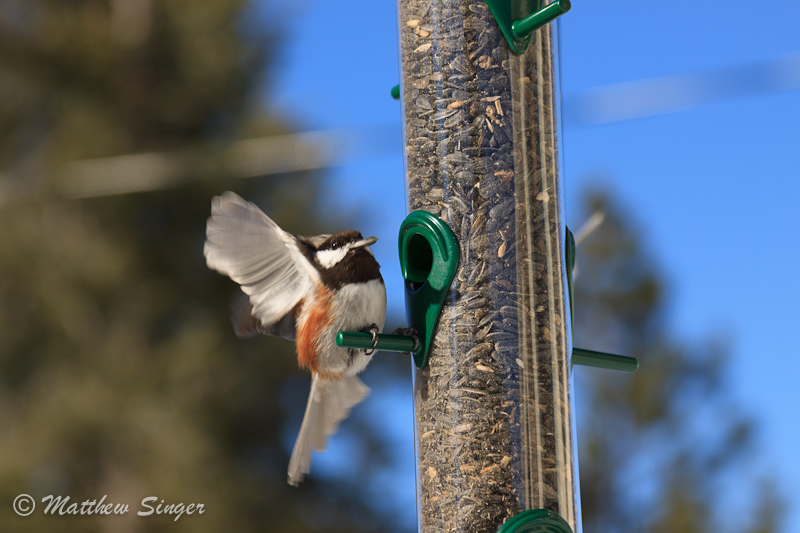
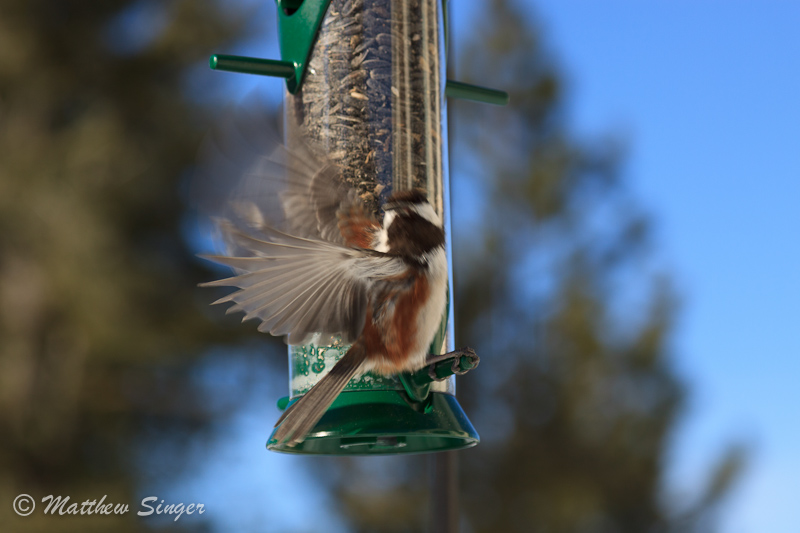
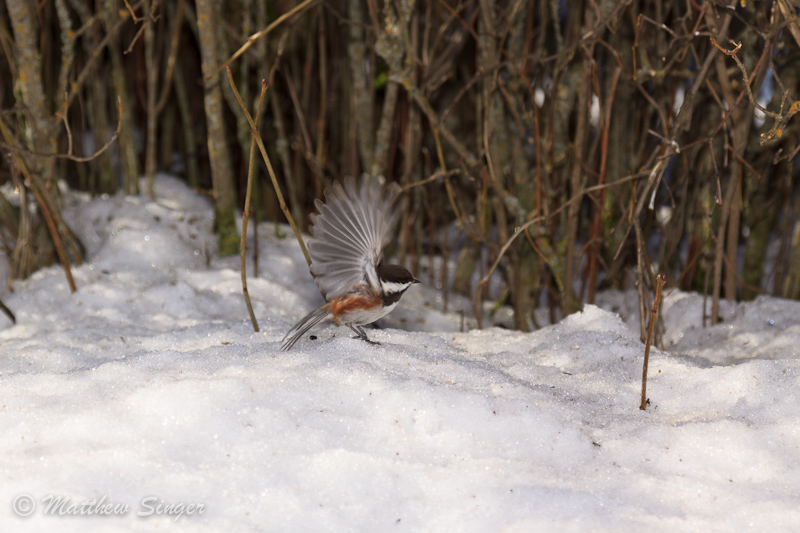
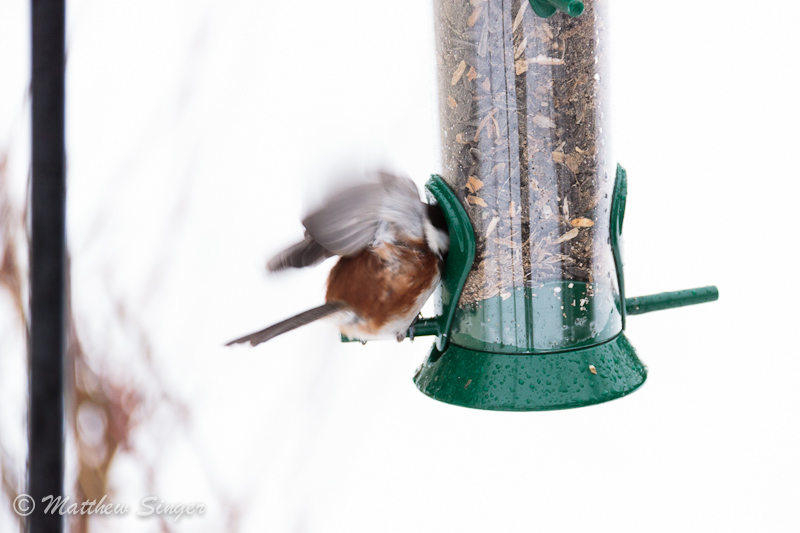
Chestnut-backed Chickadee

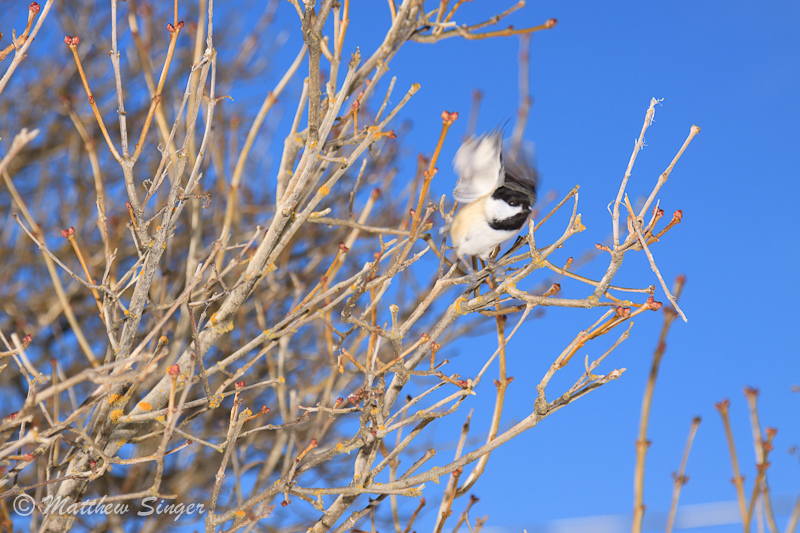
For Christmas, I bought Erin a new bird feeder to replace one that had been broken earlier in the summer. A few weeks ago, we finally got some seed and put it outside, but this was in the middle of a cold snap where daytime highs remained in the low 20’s, and the nighttime lows, well, we just won’t go there. For about a week, the feeder hung with no activity. Then, as the cold began to lift, there was a single chickadee in the lilac tree. It must have spread the news because a few days later, the feeder had full activity.

Erin had noticed that we had Chestnut-backed chickadees this year, in addition to the Black-capped and Mountain varieties that have been showing up regularly since we moved in. So, now we have three of the four chickadee species found in Idaho. It’s unlikely that we’ll see the Boreal chickadee at our feeders since it prefers high altitudes and is found in the northernmost portion of the panhandle.

Since the feeder has been up, we’ve also seen the return of the juncos, red-breasted nuthatch, house finch, pine siskin, and common redpoll.

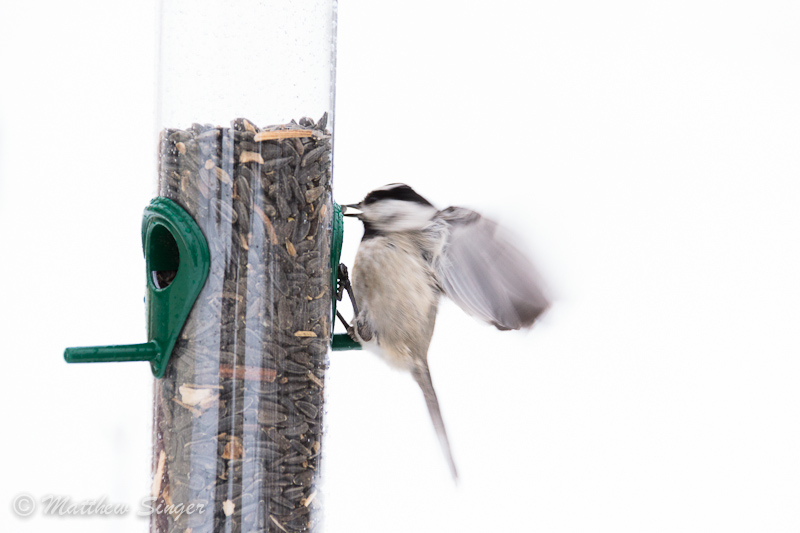
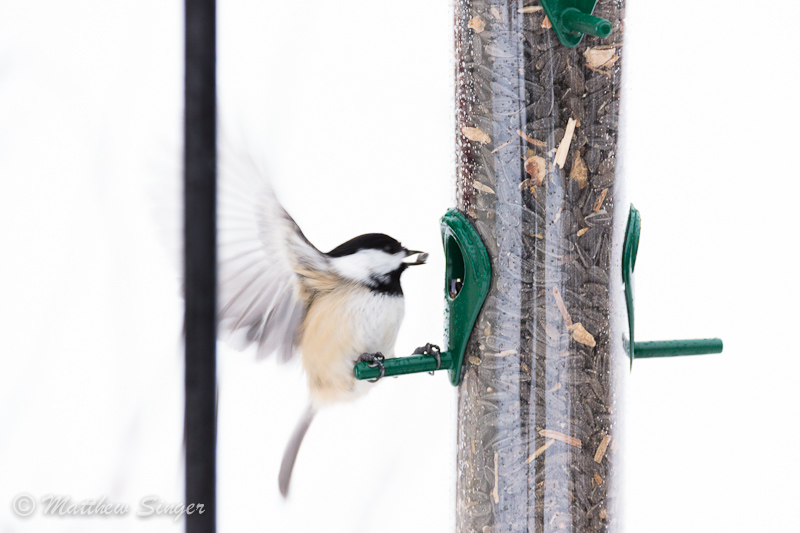
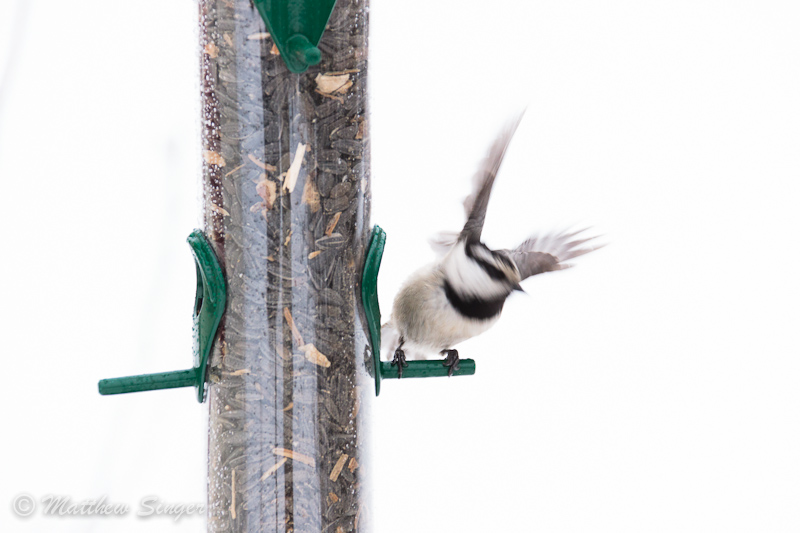
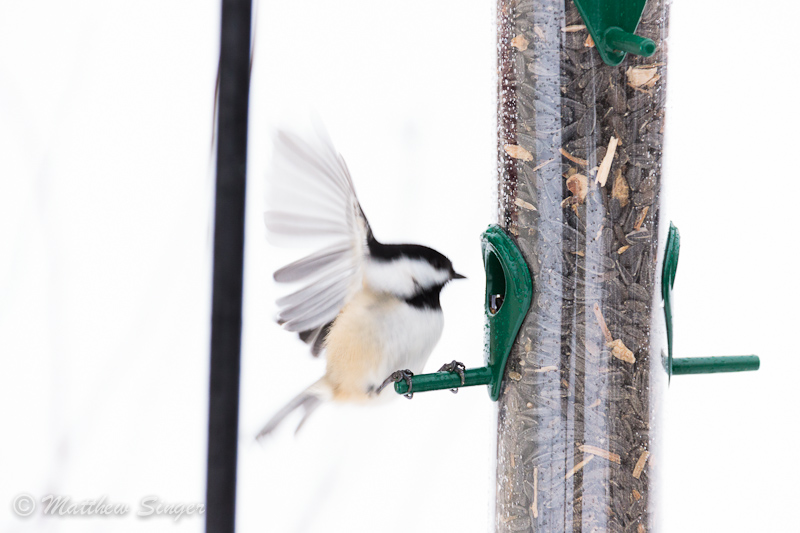
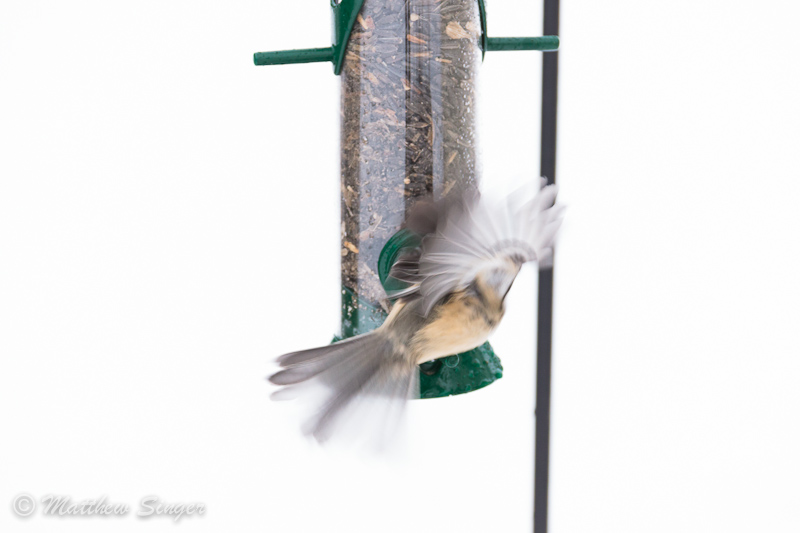
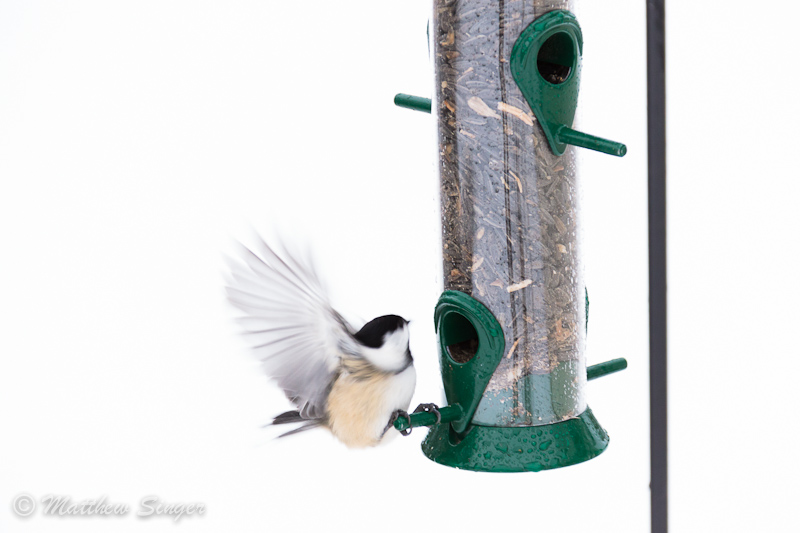
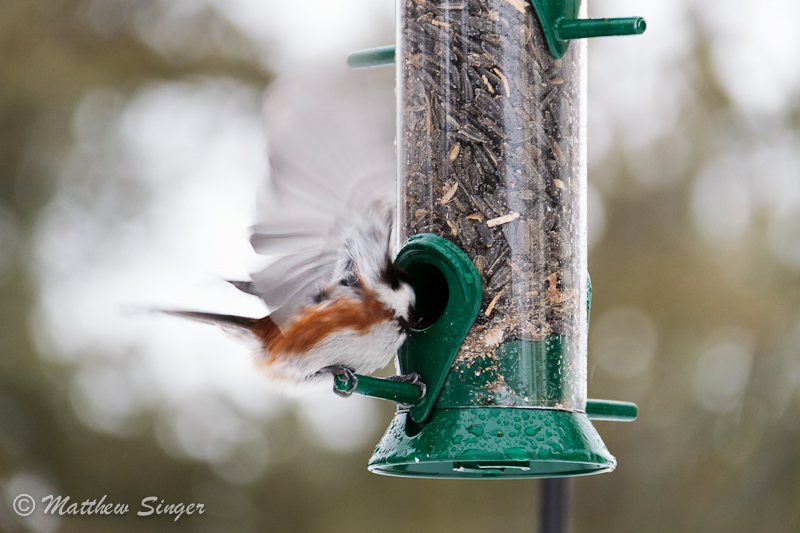
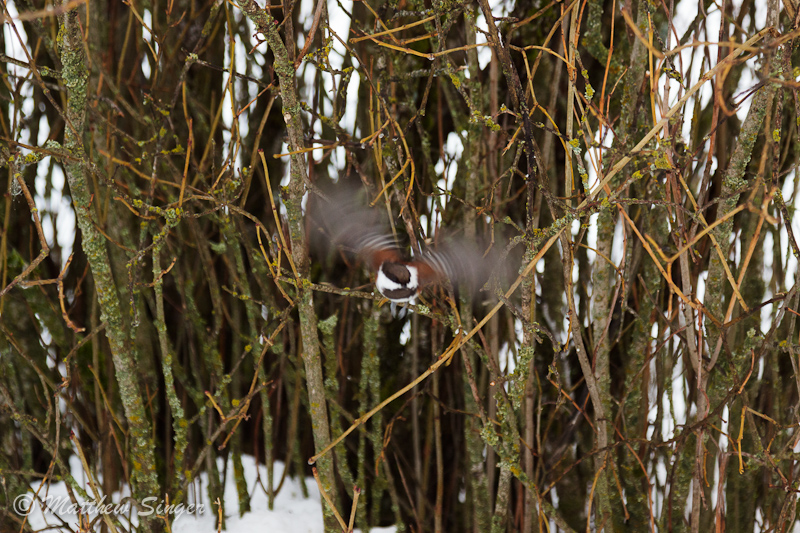
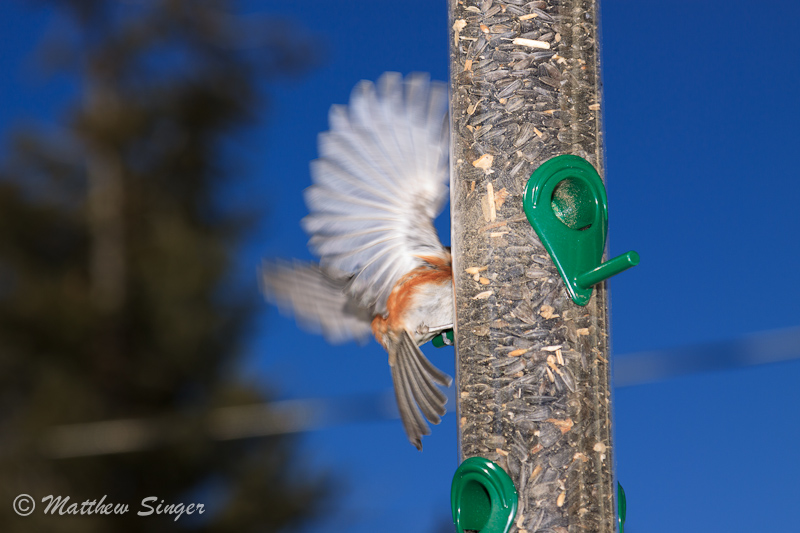
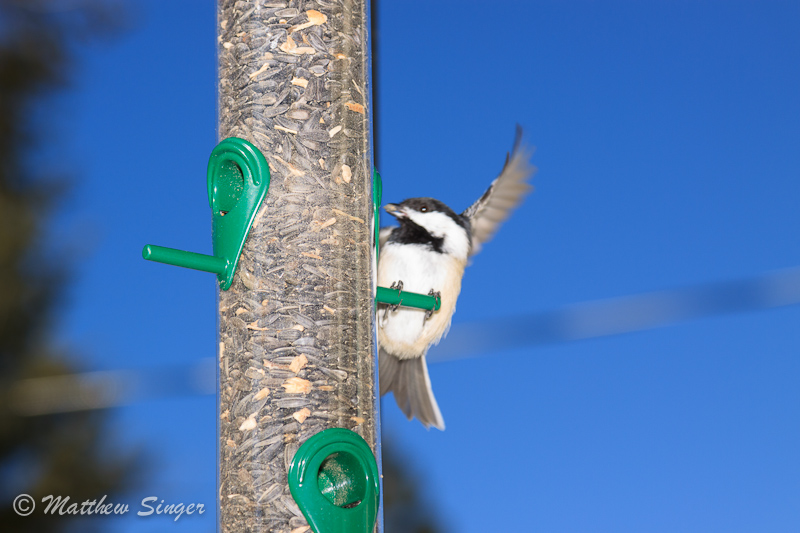
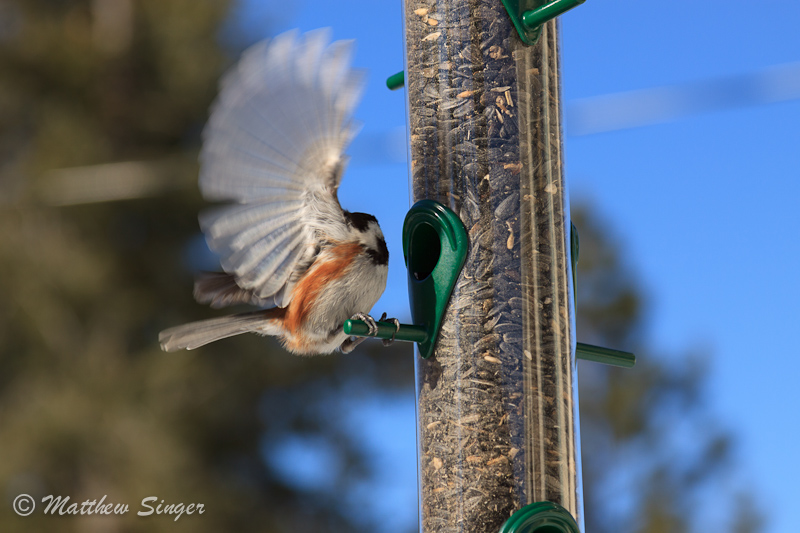
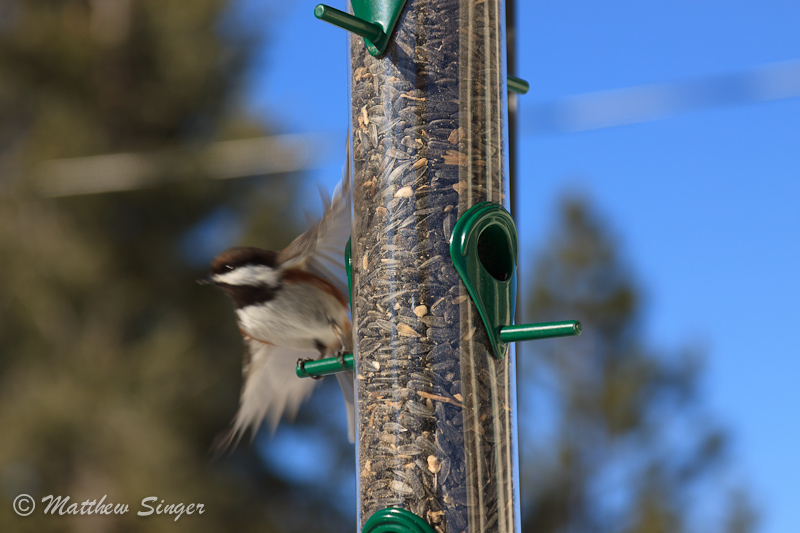
One of the problems photographing chickadees is that they’re so damn fast. They would land on the feeder, and in the time it took to swing the mirror up and open the shutter, they were already leaving. I think the noise from the shutter/mirror mechanism is frightening them away. The result is very few images of chickadees sitting still, and a whole portfolio of chickadees in mid-wing flap. In some ways, this is no good, but in another way, it’s a neat series of images. So I present to you a gallery of chickadee mis-fires, or birds that just won’t cooperate for a photo shoot.
Similar Posts

  • Winter Desires

    I was in town today getting snow tires for Erin’s Jeep, and when I’m in town, I often head over to Hyperspud to look at maps, books and gear that I can’t afford. Today I was looking through the book Mountaineering: Freedom of the Hills put out by the aptly named Mountaineers Press. They put out some nice hiking guides and how-to books for outdoor recreation. Turns out, this book is the “Bible” for mountaineers, and I want it. I also desperately want to get into mountaineering so that I may continue to hike and explore all year round. While…

  • |

    Fourth of July

    For many years, I have spent my Fourth of July basking in the part of America that I enjoy the most: its wild and natural beauty. It started in 2011 when I explored the Hobo Cedar Grove for the first time. Then again in 2013 when I hiked Grandmother Mountain. In 2015, I spent the fourth in the Seven Devils with friends. This year, I returned to Grandmother Mountain for what may be my last visit to one of my favorite peaks in the vicinity of Moscow.

  • Introducing Clara

      On Thursday, June 19, my 32nd birthday, Erin woke up having contractions that were 10 minutes apart, give or take a minute. This persisted through the morning. By the afternoon, the contractions had gotten closer together. We left home around 2:30 and an hour later, we were at the birth center in Moscow. Clara would have been born at the birth center with the midwife attending, but upon the final moments, we discovered she was breech. So, Erin was transferred over to the hospital where Clara came into this world ass-first at 10:47 pm. Since we’ve arrived home, life…

  • |

    Fireworks in the Mountains

    A garden update from the last post: I’m happy to announce that the lettuce that the chickens ate down to the soil is growing back quite nicely and will be ready for consumption within a few days. And now on to the main post: Elk River hosts an annual Independence Day celebration they call “Fireworks in the Mountains,” but they don’t necessarily hold it on the 4th of July, but on the weekend before or after if the 4th happens to be mid-week. The event attracts a lot of people and the general store stays open late to sell its…

  • What might the native prairie have looked like?

    It’s hard to imagine what America’s prairies looked like when they were unspoiled. Today, more than 95% of our prairies and grasslands have been repurposed for agriculture. The last remnants are so highly fragmented that it’s a fight to keep non-native invasive species from taking over. Prairies and grasslands were once thought to be ecological wastelands, a monoculture of grass with not much productivity. From a distance, the prairie might seem like a boring place. But up close, prairies have the capacity to harbor more diversity than some forests. To really appreciate all that these grasslands have to offer, it’s…

  • The Garden of 2013

    Because I was laid up and out of commission for much of the spring, I wasn’t able to work on expanding our garden much this year. Last year, I built a third 4×8 foot box and a 2×4 foot box which were meant to be tiered for planting small annual herbs in large quantities. I never got that box filled with dirt, so that will have to wait until next year. In the mean time, we’ve planted our usual array of crops in the two 4×8 foot boxes with limited success. Erin had bought some tomato plants in April, and…