4th of July
Once again, I missed the fireworks. I admit that I was looking forward to photographing them, but in the end, I was busy hanging out with friends, and we decided not to go over to Pullman. I did spend much of my nation’s birthday enjoying one of the best parts about this country: its wild side.
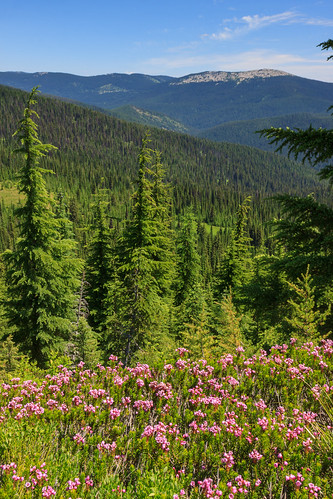
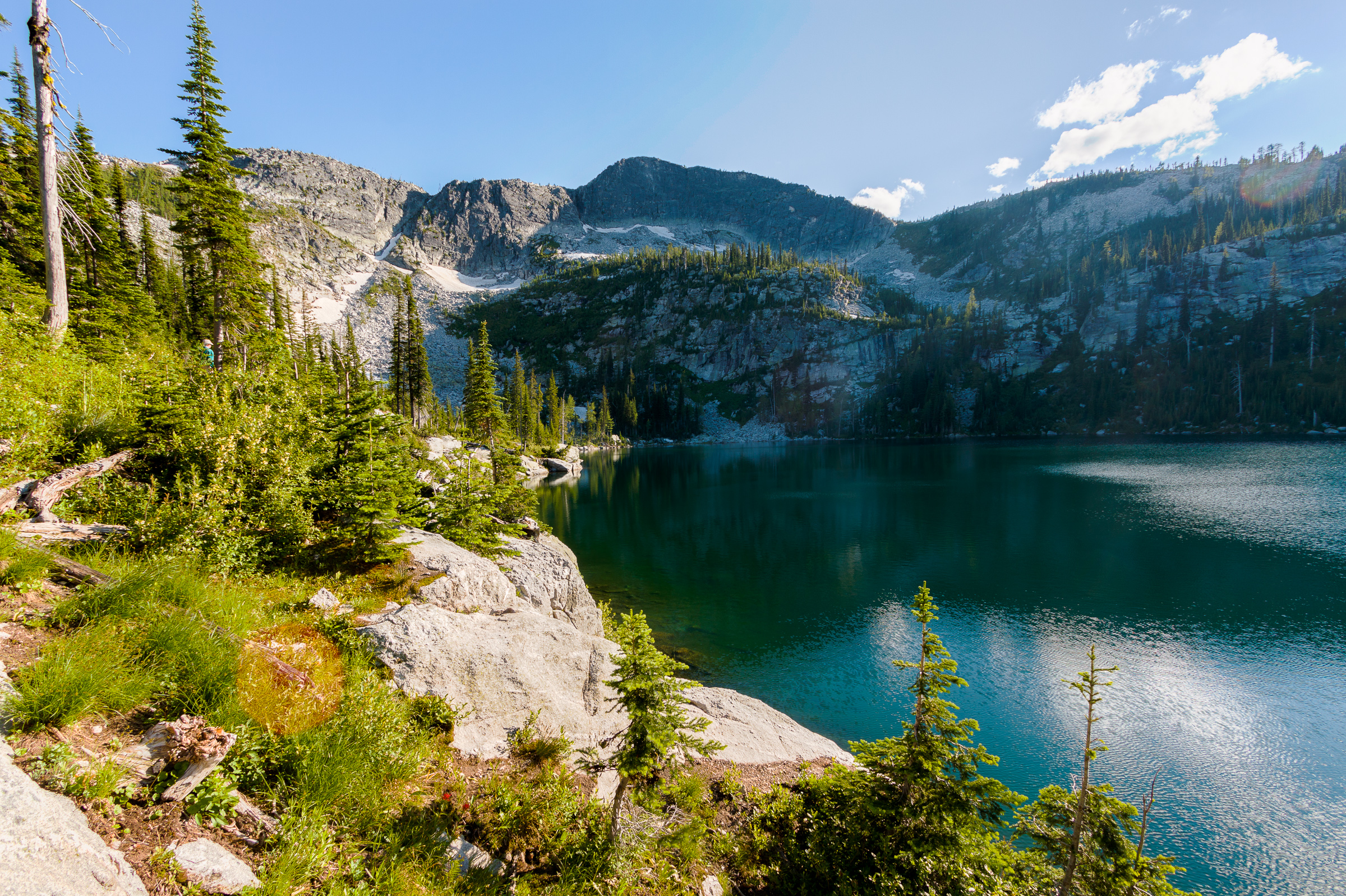
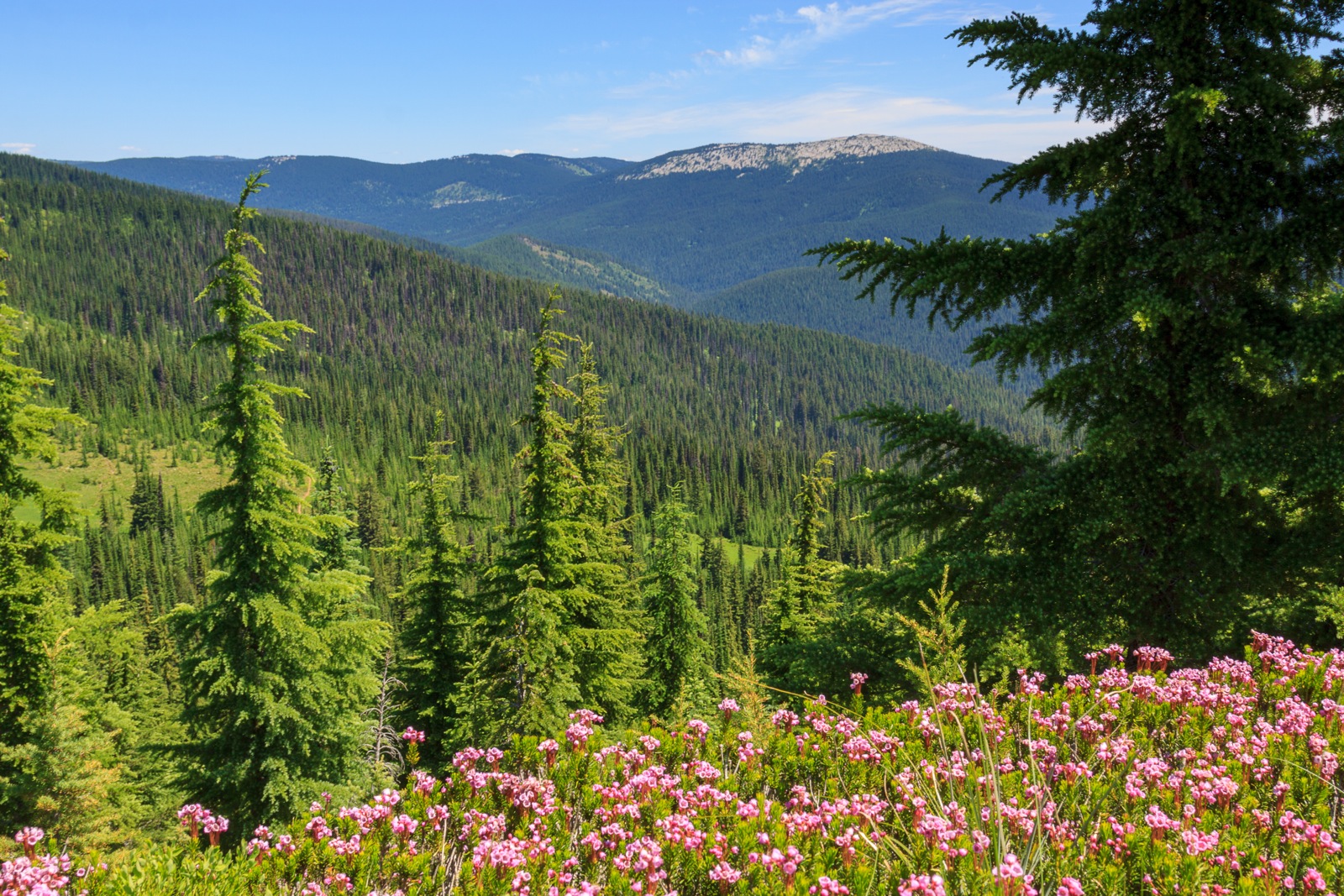
I went back up to Freezeout to hike into the alpine meadows of Grandmother Mountain, and I brought a friend with me who had never been up there. Our goal was not to reach the summit, but to simply escape the heat, enjoy the views, and see what wildflowers were in bloom. It was a beautiful day for a hike worthy of celebrating our day of Independence.
Wilderness is not uniquely American, but there are some unique aspects of the idea that originated here. There are many vast tracts of wilderness on the planet, but most of them are located in places that are either uninhabitable or are conomically depressed. But as third world nations develop and our resource consumption grows, these wild places are under threat of being lost forever. This happened through much of Europe where wilderness is nearly nonexistent. Sure, there are still natural places, but the habitat is highly fragmented and much of the forest land has been converted to fields for agriculture. The United States was headed for a similar disaster. Most of the forests in the east have been cut down at one point in our history and left to re-grow in small patches here and there. We have almost no original prairie left on the great plains. And the great western forests are logged down to the soil in places.
But before we could cut down every last tree and develop every last interesting place into a circus show, we decided that some places were better left unspoiled in their natural state, and that this untouched paradise could be an attraction in itself. So, at the end of the 19th century, the national park system was born, an idea that is truely American and has spread around the world in efforts to protect special places in danger of being lost for developmental gain. In the 1960’s, the push for true wilderness brought us the Wilderness Act of 1964, allowing congress to set aside land to never be developed. Few of today’s wilderness areas were untouched when designated, most were once logged or mined or farmed and were abandoned to be reclaimed by the forces of nature. This is what makes the United States so great and so unique. We are a developed and technologically advanced nation that set aside valuable habitable or developable land in order that we may have some wild places left to enjoy.
The forests of Marble Creek and Freezeout were once logged bare, but decades of non-use have hidden many of the scars. The landscape is beautiful up there with a sense that you truely are in a wild place, even if it’s not completlely untouched.
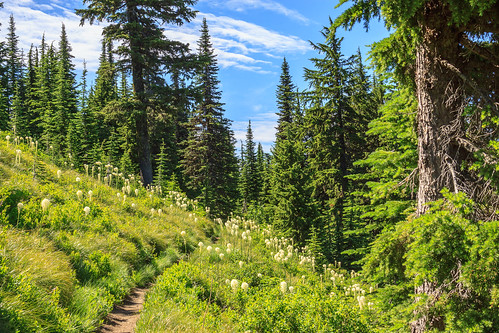
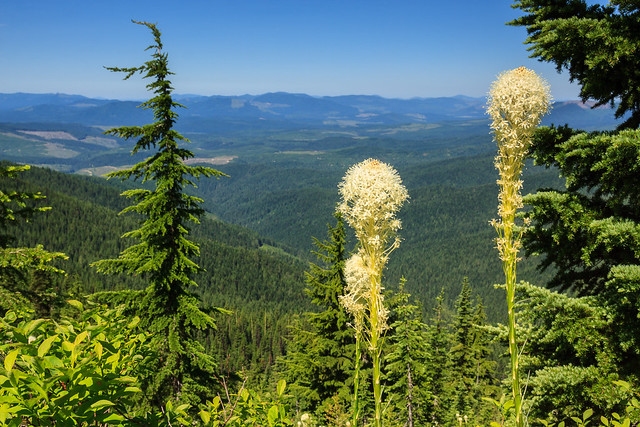
I’m still amazed by how much beargrass is in bloom. It seems to be a good year. But all good comes with a trade-off, and the trade-off here is that the rest of the wildflowers don’t seem to be doing as well. The quantity of lupine blooming is down from the past two years, and much of the other color is missing as well. It’s not that the plants aren’t there, they just aren’t putting out flowers this year.
CJ and I hiked a total of four miles, two in and two back, which brought us up the slope to Grandmother Mountain, but not quite to the 6000 foot line. In other words, we didn’t make it to the big rock upon which I like to stop and rest. But that’s ok. I hiked four miles and my leg never bothered me. This marks the first time I’ve hiked that kind of distance since the accident, and to make it better, we made the hike in 2 hours, my normal hiking pace. I’m excited because I could very well be back to taking moderate day hikes by the end of the summer.